
There’s a question we get often, and it’s worth answering plainly: why does a Connecticut therapeutic hypnosis practice have an ancient Egyptian eye for a logo? It looks unusual — even a little mystical — for a clinical-feeling service. The short answer is that the symbol is older than almost any visual emblem you’ll encounter, and it means something very specific. The long answer is that what it means is exactly what we do.
Start with the colors — they’re already telling you something
Before we get into the myth, look at how the design is organized. The Egyptians used color as a coded language, and the four pigments in our logo were among the most sacred in their visual vocabulary. Each one carried specific meaning that anyone walking past a tomb wall would have read without thinking about it.
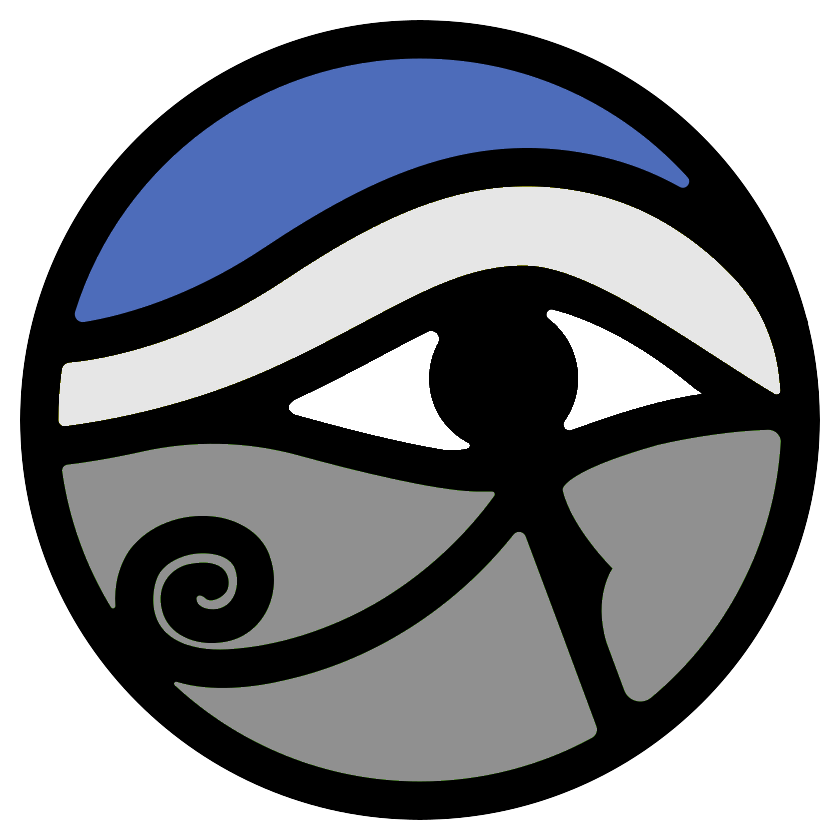
Blue · The Sky
The realm of the gods
Blue was among the most precious colors the Egyptians used. It was tied to lapis lazuli, a rare stone traded across thousands of miles, and Egyptian craftsmen invented a manufactured pigment, now called Egyptian blue, to capture it. It signified the heavens, the cosmic order, the supernatural realm. Gods were painted with blue wigs and blue skin to mark their divine origin. In our logo, the blue is the sky above the eye — the world the gods inhabit, looking down on what perceives.
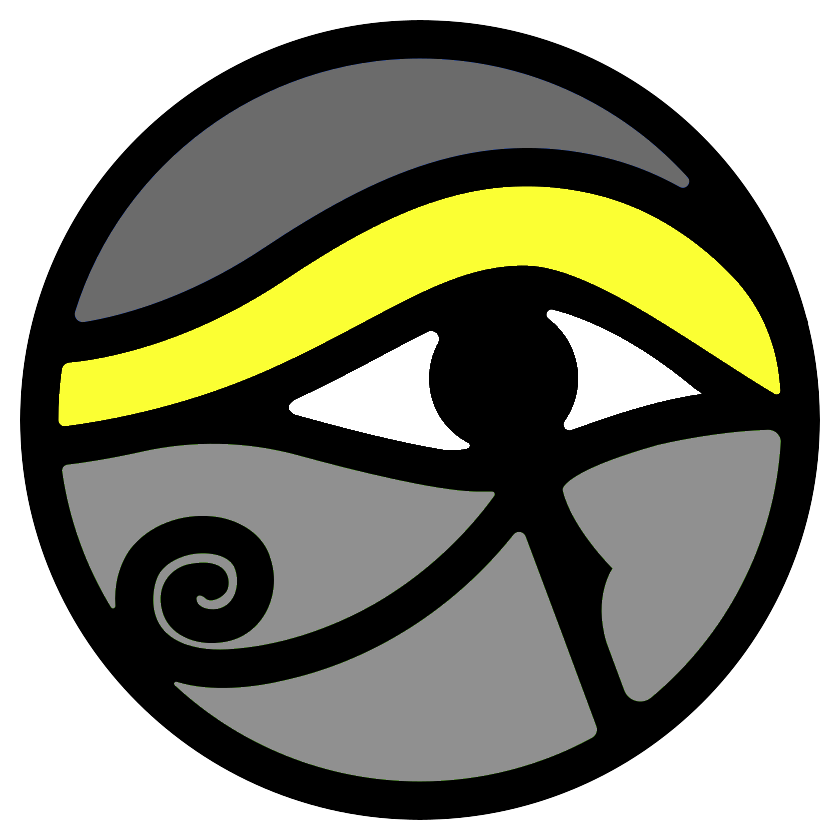
Yellow · The Sun
The eternal radiance
Yellow and gold signified the sun and divine flesh — the body of Ra, the warmth that made life possible. Because the sun is eternal, the color came to mean immortality itself; the skin of the gods was painted gold to mark them as deathless. In our logo, yellow rides between the sky and the earth, the source of light that touches both.
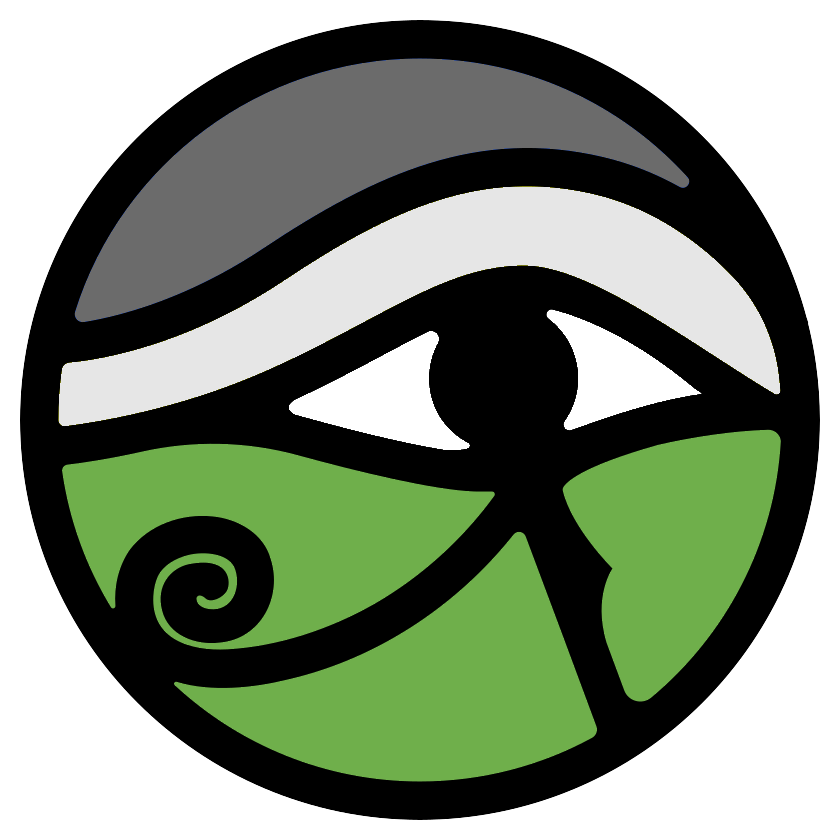
Green · The Earth
Vegetation, fertility, renewal
Green was the color of plants and crops — of the fertile Nile valley, of agricultural prosperity. But it was more than that. Osiris, the god who ruled the afterlife and presided over rebirth, was painted with green skin to mark his power over death and return. Green meant renewal — what dies in winter comes back. In our logo, green is the grounded world, the body of the eye itself.
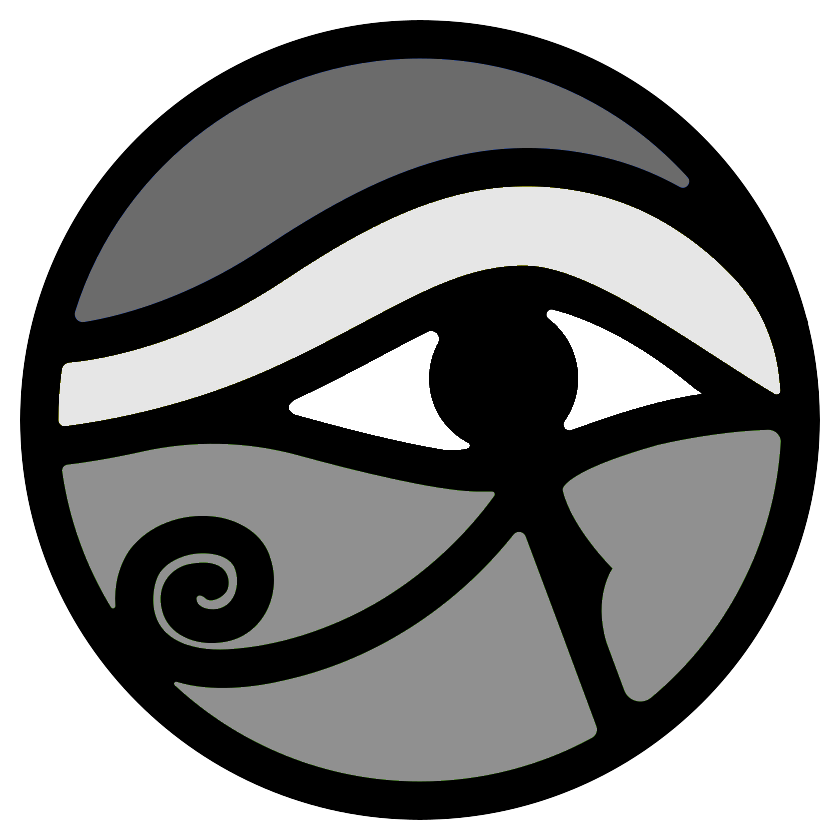
White · The Inner Light
What perceives
White meant purity, sacredness, ritual cleanliness — but also clarity, the inner light. It was the color of priestly linen, of what is illuminated within. Notice where the white sits in our design: not in the sky, not on the earth, but inside the eye. The light is interior. It doesn’t shine from outside; it shines from where perception happens. In hypnosis we have a name for that interior light — the mind’s eye.
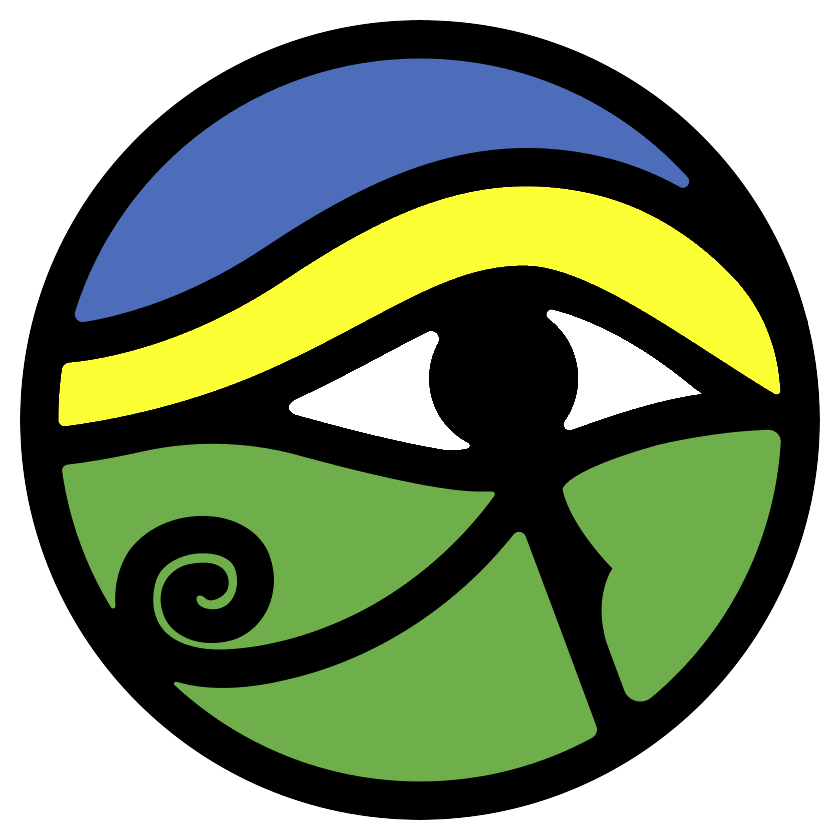
Read the colors together and the symbol is already saying something specific before you know any of the mythology: between the visible world above and the visible world below, there is an eye, and at the center of that eye is light.
The circle, and the line above the eye
Two more pieces of the design carry meaning. The circle that contains everything is not just a frame. To the Egyptians, the circle — the shen ring — symbolized eternity, completeness, the cycle of the sun returning to itself each day. Anything drawn inside the circle was understood to participate in that wholeness. This is whole. This is complete. This is protected.
And the curving black line above the eye, the eyebrow, is the first of the six components that encode the human senses. It represents thought — the interior faculty that arches above and oversees what the eye takes in. The Egyptians treated thought as a sense alongside sight and hearing. Notice how the eyebrow is the one component drawn above the others, watching over them. That positioning was deliberate.
The myth that gave the symbol its meaning
Now the story. Horus, the sky god, is in a fight with his uncle Set — the god of chaos, the desert, of things going wrong. The fight is brutal. Horus survives but loses his left eye. It’s torn out and shattered into pieces.
Then Thoth, the god of wisdom, finds the fragments. He gathers them up and patiently restores the eye, stitching it back together. This restored eye — pieced together from what was broken — is the Wedjat. The word translates, with surprising precision, as “the whole one” or “the one who is complete.”
And Horus, with his new sight, performs his first act: he gives the eye to his dead father, Osiris, and the eye’s power brings Osiris back. The restored sight becomes the instrument of someone else’s restoration.
You can read that myth a dozen ways. The Egyptians read it as a story about healing after damage. About what is lost being made whole. About wholeness, once recovered, having the power to heal what it touches.
That which was broken can be made whole again — and that wholeness has the power to heal what it touches.
Each line of the eye means something
Here is the detail that turns the Wedjat from a pretty symbol into something close to sacred mathematics. In a well-known traditional reading, every visible part of the eye corresponds to one of six human senses, and each part also stands for a fraction. Historians still debate how ancient this reading is, but it has shaped how the symbol has been understood for generations. Aristotle would later count five senses; this tradition counts six.
The whole eye · Six parts · 63/64
The Wedjat as a complete symbol — circle, colors, and lines. Six visible components, each representing both a fraction (1/2, 1/4, 1/8, 1/16, 1/32, 1/64) and one of the six senses by which a person takes in the world.
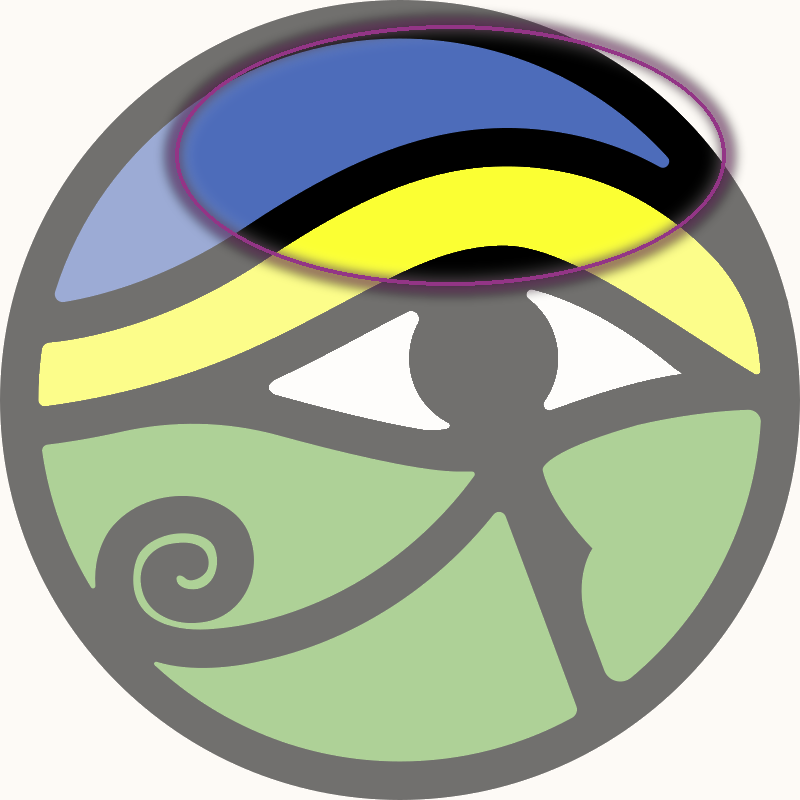
1 · Thought · 1/8
The eyebrow
The interior faculty — what the mind sees before the world does. Egyptian thinking placed thought outside the eye but watching over it, like an eyebrow over a pupil. Imagination, memory, the inner sense that knows things the eyes never showed.
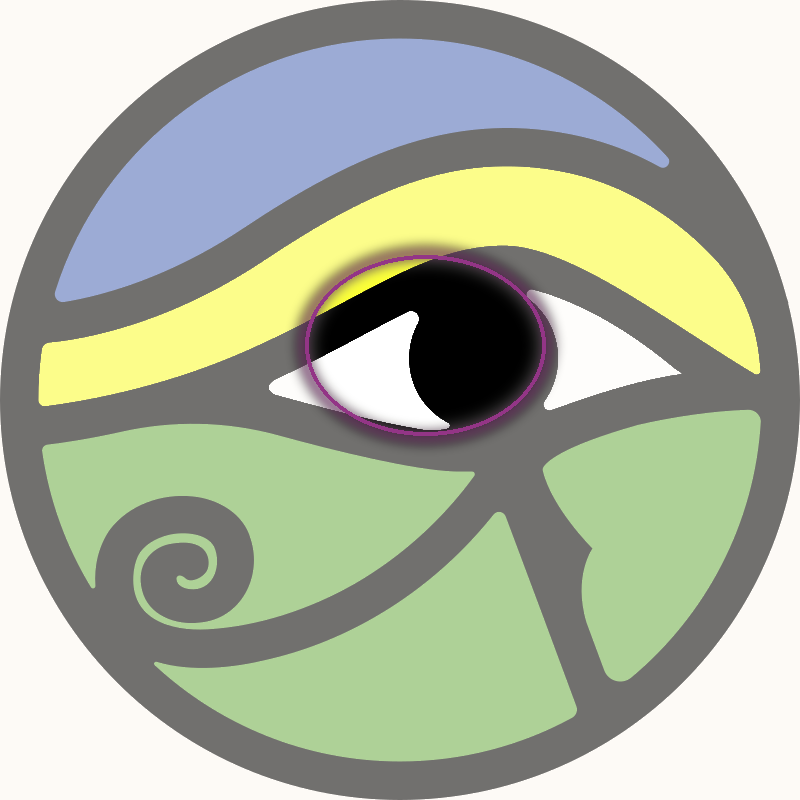
2 · Sight · 1/4
The pupil at the center
The literal eye — what the waking attention takes in. The Egyptians gave sight one of the largest fractions because it brings in more raw data than any other sense. But notice: it is not the largest. Thought sees what sight cannot.
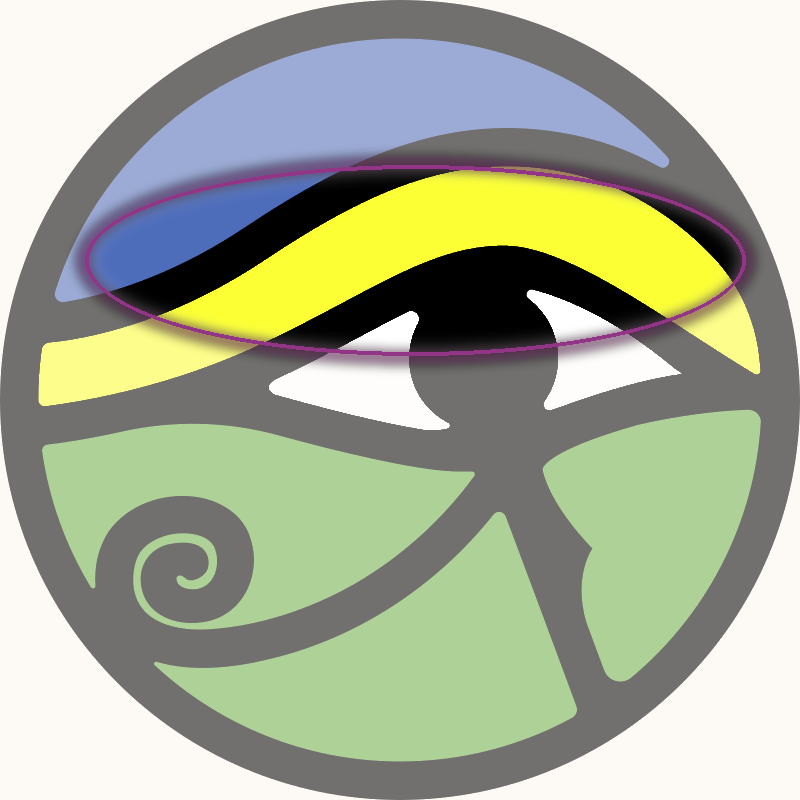
3 · Hearing · 1/16
The band crossing the eye
What enters through sound — words, music, the voice of another. The component that bridges the upper region (thought) and the lower region (the body), the way hearing bridges what we think about and what we feel.
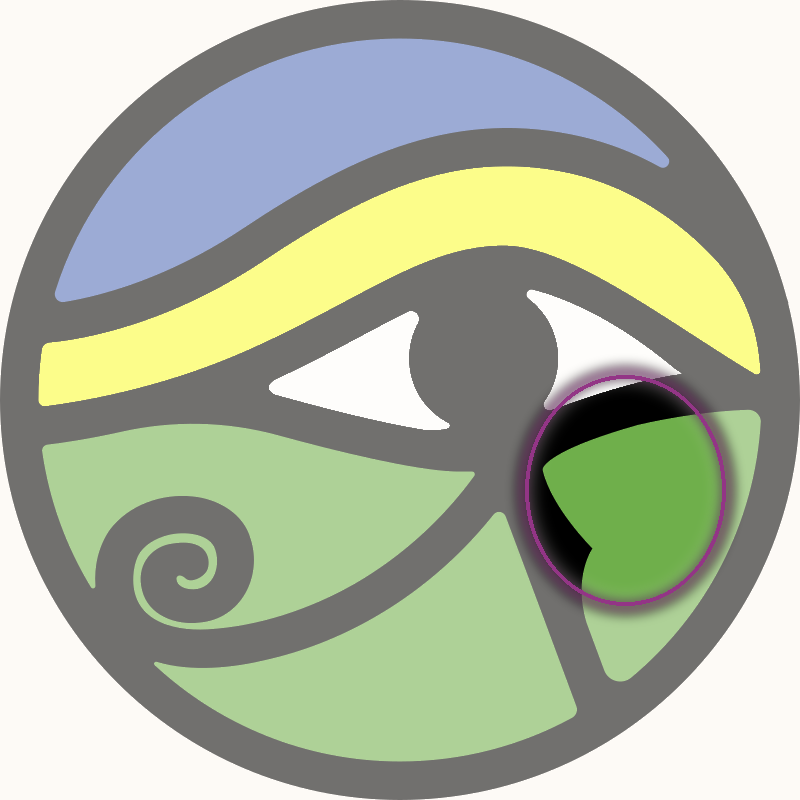
4 · Smell · 1/2
The shape to the right of the eye
The most ancient sense, tied closest to memory and emotion. Smell got the largest fraction in the Wedjat math — fitting, since neuroscience now confirms how closely scent is tied to memory and feeling.
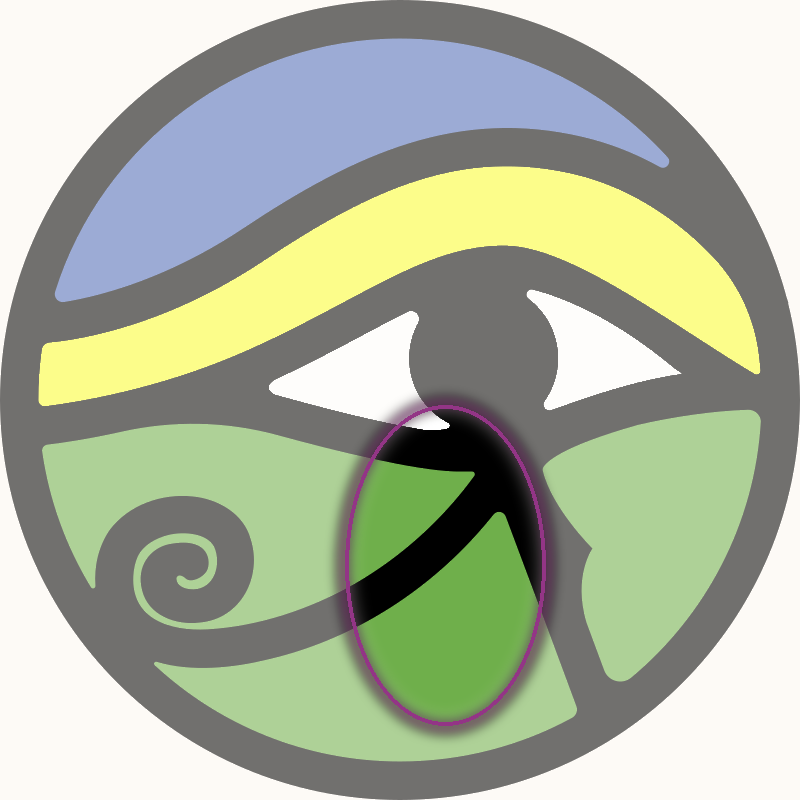
5 · Touch · 1/64
The long diagonal stroke
Embodied knowing — what the body perceives that the mind cannot articulate. Touch carries the smallest visible fraction in the Wedjat math, but it is the sense most directly engaged in this work: where tension lives in the shoulders, what the gut already knew, the things the body remembers that the mind has tried to forget.
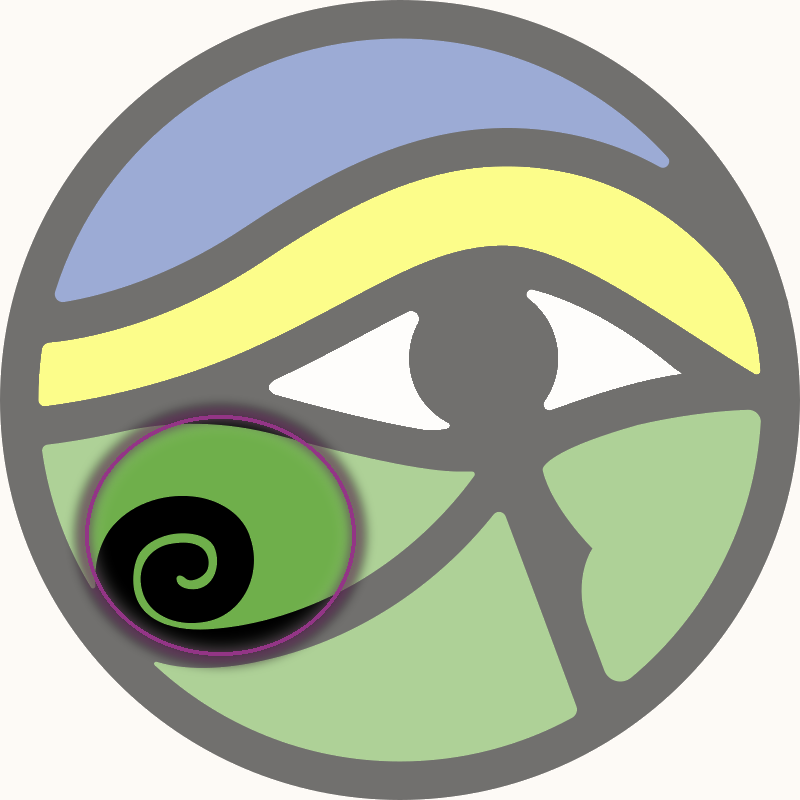
6 · Taste · 1/32
The curling tendril below
Discernment — the sense that learns to distinguish nourishing from harmful. The Egyptians associated taste not only with food but with judgment more broadly: the developed capacity to know what is good for us and what is not.

The 64th part · Soul · 1/64
The missing sixty-fourth
The really beautiful part is what happens when you add up the six fractions. They sum to 63/64, not the full 64/64. The missing 1/64, the story goes, was supplied by Thoth through magic. Read this way:
Complete perception is never something we achieve on our own. There is always a remainder, a piece that has to be given, that arrives by grace. Wholeness, in this reading, is collaboration: effort plus gift.
The remaining part is the soul, the peace that arrives by grace.
Why this symbol, on this kind of practice
Hypnosis is often misunderstood. People imagine it as something stagey — a watch swinging back and forth, someone clucking like a chicken on a Las Vegas stage. That’s hypnosis as entertainment. It bears almost no resemblance to the work.
What therapeutic hypnosis actually is, in Yovanna’s office: a state of focused, integrated inner attention. The body is relaxed. The surface mind quiets. A deeper layer of awareness comes forward — one that has access to memory, sensation, intuition, and pattern recognition that your everyday waking mind can’t easily reach. You stay aware. You stay in control. You choose what changes.
That deeper layer of awareness is what people have always called the mind’s eye. It’s the inner sense of sight that operates whether your physical eyes are open or closed. It’s where imagination lives. It’s where you can revisit a place from twenty years ago and still see, with strange clarity, exactly how the light fell on the kitchen floor.
It is the same white at the center of the Wedjat. The interior light. The part that perceives.
And that inner seeing is where much of the work of hypnosis happens. Anxiety, phobias, recurring patterns, the relationship you have with your own body — these often sit deeper than words easily reach. In a relaxed, focused state, many people find they can notice them more clearly, and seeing something clearly is often the first step toward working with it.
The arc of a session, the arc of the symbol
If you’ve ever sat with a good hypnotist, you may recognize the arc the Wedjat myth describes. Something feels out of place — a memory, a pattern, a felt sense of safety. The pieces seem scattered. The work is slow and careful: noticing the pieces, seeing them clearly, and looking for a way to fit them back together that feels more whole.
People leave a session more integrated than they arrived. Not “fixed” in the way a broken machine gets fixed — that’s not what a person is. But more whole. More able to feel like one person again, instead of someone managing a chorus of competing fears.
And then, as in the myth, what you see can become useful beyond the session itself. Some people find they feel more present with their partners, their children and their own lives. Results differ from person to person, but that is the hope the symbol carries: that wholeness can heal what it touches.
Wholeness is recoverable. The mind’s eye knows things the surface mind doesn’t — and given the right conditions, it knows how to put them right.
Why choose an ancient symbol at all?
There’s something Yovanna says — that this kind of work is ancient work. Trance states, structured inner attention, focused visualization for healing — humans have been doing these things in some form for as long as we’ve had quiet rooms and people who knew how to listen past the surface. Egyptian temple medicine. Greek dream incubation. Healing traditions on every continent.
What we call therapeutic hypnosis is the modern, formalized version of something the species has always known how to do. It’s not a fringe technique invented in the 19th century. It’s a recovery of older knowledge, refined through clinical practice and a growing understanding of how the brain actually works.
The Wedjat at the center of our logo is the acknowledgment of that lineage. It’s our way of saying: we know what we’re doing here, and we know who taught us. It wasn’t us. It was the long line of people, across every culture, who figured out that pain held in the body can be released through inner attention, and that wholeness, once thought lost, can often be recovered.
If you’ve been considering this work for yourself, what the symbol says about the practice is also what we’d say to you directly: whatever you bring in can be worked with. Wholeness is recoverable. And the mind’s eye — your mind’s eye — already knows how to put it right. It just needs the right kind of attention to do its work.
Curious whether hypnosis could help with what you’re working through?
The first conversation is always free. We’ll talk about what you’re hoping to address, what hypnosis can and can’t do for it, and whether we feel like the right fit.
Book your free 1-hour consultation or call 860-995-5815.
Liked this post? Share it with someone who’s curious about how hypnosis works — and what it actually feels like.